A Moist, Fragrant Citrus Loaf with a Sweet-Tart Passionfruit Glaze
There is something wonderfully refreshing about the combination of orange and passionfruit, and this Orange and Passionfruit Cake brings those two bright flavors together in one beautifully moist loaf.
Made with a whole orange, fresh passionfruit pulp, butter, eggs, and self-raising flour, this homemade loaf has a soft, tender crumb with plenty of natural citrus flavor. The orange is used whole after the white pith is removed, allowing both the fragrant orange rind and juicy flesh to flavor the cake.
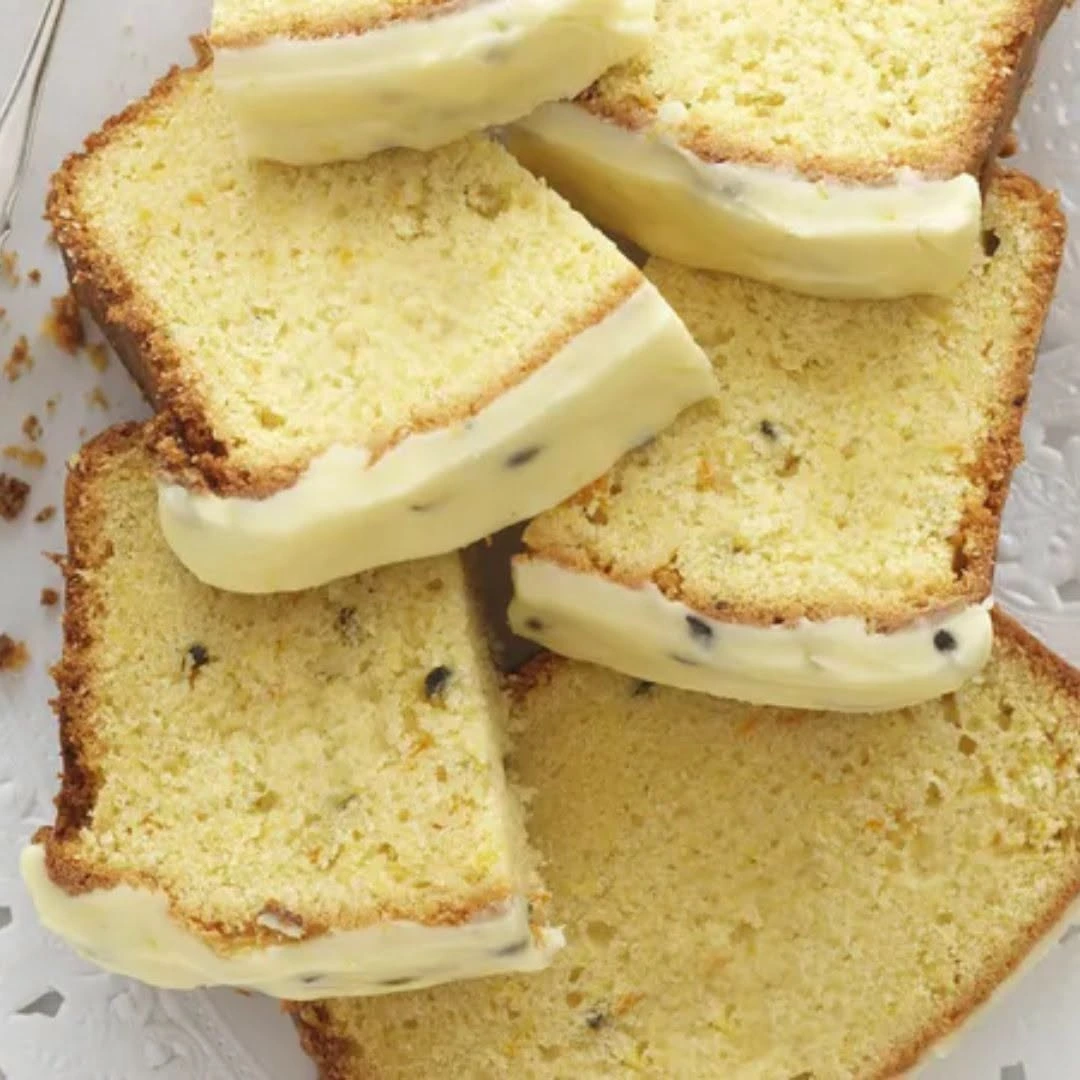
Once baked and cooled, the loaf is covered with a smooth passionfruit icing made from powdered sugar, butter, and passionfruit pulp. The icing adds a sweet, tangy finish that perfectly complements the buttery orange cake.
The result is a simple yet impressive loaf that’s perfect for afternoon tea, brunch, morning coffee, bake sales, family gatherings, or whenever you want a homemade citrus dessert.
Why You’ll Love This Orange and Passionfruit Cake
This cake is one of those recipes that looks elegant but is surprisingly straightforward to make.
Bright Citrus Flavor
The whole orange gives the cake a wonderfully fresh orange aroma and flavor.
Sweet and Tangy Icing
Passionfruit icing provides the perfect contrast to the soft, buttery cake.
Moist and Tender
Butter, eggs, milk, and fresh orange create a lovely texture that stays tender and flavorful.
Easy Loaf Cake
There’s no complicated decorating or layering. Simply bake the loaf, let it cool, and spread the icing over the top.
Perfect for Afternoon Tea
Serve a slice with tea or coffee for an easy homemade treat.
Beautiful Natural Appearance
The passionfruit seeds in the icing add little bursts of texture and give the finished cake a homemade, rustic appearance.
Ingredients You’ll Need
For the Orange and Passionfruit Cake
- 1 orange, approximately 300g
- ¼ cup (60ml) passionfruit pulp
- 185g butter, softened
- 1 cup (220g) raw caster sugar
- 2 large eggs
- 2½ cups (375g) self-raising flour
- ¼ cup (60ml) milk
For the Passionfruit Icing
- 1½ cups (240g) icing sugar
- 10g butter, softened
- 2 tablespoons passionfruit pulp
What Kind of Orange Should You Use?
For this recipe, choose a fresh orange with a fragrant peel and plenty of juice.
Because the recipe uses the orange flesh and rind, the quality of the fruit makes a difference.
Before processing the orange, the white pith must be removed because it can add an unpleasant bitterness to the cake.
The colorful outer rind contains the aromatic citrus oils that give the loaf its wonderful orange flavor.
How to Make Orange and Passionfruit Cake
1. Prepare the Loaf Pan
Preheat your oven to 170°C (340°F).
Grease a deep 14cm × 21cm loaf pan.
Line the base and sides with baking paper, allowing the paper to extend approximately 5cm above the sides.
The overhanging paper will make it easier to lift the finished cake from the pan.
Set the prepared pan aside.
2. Prepare the Whole Orange
Wash the orange thoroughly.
Using a vegetable peeler, carefully remove the outer orange rind.
Try to collect mostly the colorful orange portion of the peel rather than the white layer underneath.
Reserve the rind.
Next, use a small sharp knife to carefully remove the white pith from the orange.
Discard the pith.
Cut the orange into quarters and remove any seeds.
The orange is now ready to be processed.
3. Process the Orange
Place the orange flesh and reserved orange rind into a food processor or blender.
Process until the orange becomes pulpy.
You don’t need to turn it into a completely smooth puree. A fine, pulpy texture is perfect.
Transfer the orange mixture to a bowl.
Add the ¼ cup passionfruit pulp and stir to combine.
The mixture should have a wonderful citrus aroma at this point.
4. Beat the Butter and Sugar
Place the softened butter, raw caster sugar, eggs, sifted self-raising flour, milk, and orange-passionfruit mixture into a large mixing bowl.
For this recipe, the ingredients can be combined before mixing, making the preparation particularly simple.
Using an electric mixer, beat on low speed until the ingredients are combined.
Once everything comes together, increase the mixer speed to high.
Beat for approximately 2 minutes, or until the mixture becomes paler in color.
The batter should be thick, smooth, and evenly combined.
Avoid continuing to beat for much longer than necessary.
5. Transfer the Batter to the Pan
Spoon the cake batter into the prepared loaf pan.
Use a spatula to spread the batter evenly into the corners.
Smooth the top gently.
Because this is a deep loaf cake, spreading the batter evenly helps it bake more consistently.
6. Bake the Cake
Place the loaf pan into the preheated oven.
Bake for approximately 1 hour and 10 minutes.
Because ovens vary, start checking the cake toward the end of the suggested baking time.
The loaf should be golden on top and cooked through in the center.
A skewer inserted into the middle should come out clean or with a few moist crumbs attached.
If the top begins to brown too quickly while the center still needs more time, you can loosely cover the loaf with foil for the remainder of the baking time.
7. Cool the Cake
Once baked, remove the loaf from the oven.
Allow it to stand in the pan for approximately 10 minutes.
This short resting period allows the cake to firm slightly.
Carefully lift or turn the cake out of the pan.
Place it top-side up on a wire rack positioned over an oven tray or another easy-to-clean surface.
Allow the cake to cool completely.
It’s important to wait until the loaf is completely cool before adding the passionfruit icing.
How to Make Passionfruit Icing
8. Combine the Icing Ingredients
While the cake cools, prepare the icing.
Place the icing sugar, softened butter, and passionfruit pulp in a medium bowl.
Stir the ingredients together until the mixture becomes smooth.
The passionfruit pulp adds both flavor and moisture, while the butter gives the icing a richer texture.
The passionfruit seeds can remain in the icing. They add a beautiful natural appearance and little pops of texture.
9. Ice the Cake
Once the orange cake has cooled completely, spoon the passionfruit icing over the top.
Use a small spatula or the back of a spoon to spread it evenly.
You can allow some of the icing to naturally drip slightly down the sides for a casual homemade look.
For a neater presentation, spread the icing into an even layer across the top.
Allow the icing to sit for a few minutes before slicing so it can begin to firm.
Tips for Making the Best Orange and Passionfruit Cake
Use a Fresh Orange
Since the orange provides much of the cake’s flavor, fresh fruit is essential.
Choose an orange that feels heavy for its size and has a fragrant peel.
Remove the White Pith
Don’t skip this step.
The white pith can be quite bitter, and removing it gives the cake a cleaner orange flavor.
Soften the Butter Properly
The butter should be soft enough to mix easily but not melted.
Room-temperature butter incorporates much more evenly into the batter.
Don’t Overbake
The goal is a moist, tender loaf.
Start checking toward the end of the baking time and remove the cake once a skewer shows that it is cooked through.
Cool Completely Before Icing
If the cake is still warm, the passionfruit icing can become too thin and slide off the surface.
Wait until the loaf is completely cool.
How to Get the Best Passionfruit Flavor
Passionfruit has a naturally sweet-tart flavor that can vary depending on how ripe the fruit is.
For the strongest flavor, use ripe passionfruit with fragrant pulp.
The seeds can be left in both the cake mixture and icing.
They are completely edible and contribute to the characteristic appearance of passionfruit desserts.
If you prefer a smoother icing, you can strain the passionfruit pulp to remove the seeds before adding it to the icing.
Can I Use Bottled Passionfruit Pulp?
Yes, bottled or frozen passionfruit pulp can be convenient when fresh passionfruit isn’t available.
If using frozen pulp, thaw it completely before measuring.
Fresh passionfruit will generally provide the brightest flavor, but prepared pulp can work well too.
Can I Use a Different Pan?
The recipe is designed for a deep 14cm × 21cm loaf pan.
Using a different size or shape can change the baking time.
A wider, shallower pan may cause the cake to bake more quickly, while a smaller or deeper pan may require additional time.
If you change the pan, keep an eye on the cake and use a skewer to check for doneness.
What Does the Whole Orange Add?
Using the orange flesh together with the rind gives the cake a particularly concentrated citrus flavor.
The orange rind contains aromatic oils, while the flesh provides moisture and natural citrus flavor.
The important part is removing the white pith before processing.
This technique creates a beautifully fragrant orange cake without needing a large amount of orange juice or artificial flavoring.
Serving Suggestions
This cake is delicious on its own, but there are several ways to serve it.
With Tea
A slice of orange and passionfruit cake is perfect with a cup of black tea or herbal tea.
With Coffee
The bright citrus flavor pairs surprisingly well with a strong cup of coffee.
With Whipped Cream
Add a small spoonful of lightly sweetened whipped cream for a more indulgent dessert.
With Fresh Passionfruit
Spoon a little extra fresh passionfruit pulp over each slice just before serving.
With Vanilla Ice Cream
For a dessert-style serving, place a slice alongside a scoop of vanilla ice cream.
How to Store Orange and Passionfruit Cake
Once the icing has set, store the cake in an airtight container.
Keep it in a cool, dry place if serving relatively soon.
For longer storage, refrigeration is an option.
If refrigerated, allow the cake to sit at room temperature for a short time before serving. This allows the butter-rich cake to soften slightly.
Keep the cake covered to prevent it from drying out or absorbing refrigerator odors.
Can I Freeze This Cake?
Yes.
For the best results, freeze the cake without the icing.
Allow the loaf to cool completely, then wrap it securely in plastic wrap and place it in a freezer-safe container or bag.
Thaw the cake completely before preparing the passionfruit icing.
Once thawed, add the fresh icing and allow it to set before serving.
This gives the cake a fresher appearance and better icing texture.
Delicious Variations
Orange and Lemon Cake
Replace part of the orange flavor with fresh lemon zest and juice for a sharper citrus loaf.
Orange and White Chocolate
Add finely chopped white chocolate to the batter for a creamy, sweet contrast to the citrus.
Passionfruit Drizzle Cake
Make the passionfruit icing slightly thinner and drizzle it over the cake instead of spreading it into a thick layer.
Coconut Orange Cake
Add a little shredded coconut to the batter for a tropical twist.
Orange, coconut, and passionfruit make a wonderful combination.
Orange Poppy Seed Cake
Add poppy seeds to the batter for a little extra crunch and texture.
Why This Cake Is Perfect for Afternoon Tea
There are some cakes that are best served warm with ice cream, while others are made for a quiet afternoon with a cup of tea.
This orange and passionfruit loaf belongs firmly in the second category.
Its tender crumb, bright citrus flavor, and sweet-tart icing make it light enough for afternoon tea while still feeling like a special homemade dessert.
Slice the loaf into medium-thick pieces and arrange them on a serving plate.
For an elegant presentation, garnish with a few fresh passionfruit seeds or thin strips of orange zest.
Frequently Asked Questions
Can I make this cake without passionfruit?
Yes, but the flavor will change. You can make an orange-only loaf and use an orange-flavored icing instead.
Do I need to remove the orange peel completely?
No. The recipe actually uses the orange rind, but the white pith should be removed. The colorful outer rind provides fragrant citrus oils.
Why is my cake dry?
Overbaking is one of the most common reasons for a dry loaf. Check the cake toward the end of the suggested baking time and remove it once a skewer shows it is cooked through.
Why is my icing too runny?
Too much passionfruit pulp can thin the icing. Add a little more sifted icing sugar until you reach a smooth, spreadable consistency.
Can I leave the passionfruit seeds in the icing?
Absolutely. The seeds are edible and give the icing the classic passionfruit appearance.
Can I use plain flour instead of self-raising flour?
The recipe specifically calls for self-raising flour, which contains its own raising agents. If substituting with plain flour, you would need to account for the missing leavening separately.
How do I know when the loaf is finished?
Insert a skewer into the center of the cake. It should come out clean or with a few moist crumbs rather than wet batter.
Perfect Occasions for Orange and Passionfruit Cake
This loaf is versatile enough for almost any occasion.
Serve it at:
- Afternoon tea
- Weekend brunch
- Mother’s Day
- Easter
- Birthday gatherings
- Family celebrations
- Garden parties
- Bake sales
- Holiday dessert tables
- Casual coffee dates
Its bright citrus flavor makes it especially enjoyable during spring and summer, while the comforting buttery cake means it can easily be enjoyed all year round.
Final Thoughts
The whole orange gives the loaf an especially fragrant flavor, while the passionfruit adds a tropical brightness that keeps the cake from feeling overly heavy.
The smooth passionfruit icing is the perfect finishing touch. Its creamy sweetness balances the slightly tangy passionfruit pulp and creates a beautiful contrast against the golden cake.
Best of all, the recipe is straightforward. Prepare the orange, mix the batter, bake the loaf, let it cool, and finish it with the simple passionfruit icing.
Serve thick slices with coffee or tea, or dress them up with whipped cream and fresh passionfruit for a more elegant dessert.
Soft, buttery, citrusy, and topped with irresistible passionfruit icing, this is a loaf cake you’ll want to make again and again.
Print
Orange and Passionfruit Cake with Passionfruit Icing
- Total Time: 85 minutes
- Yield: 8 servings 1x
- Diet: Vegetarian
Description
A moist and fragrant loaf cake made with whole orange and topped with a sweet-tart passionfruit glaze, perfect for any occasion.
Ingredients
- 1 orange, approximately 300g
- ¼ cup (60ml) passionfruit pulp
- 185g butter, softened
- 1 cup (220g) raw caster sugar
- 2 large eggs
- 2½ cups (375g) self-raising flour
- ¼ cup (60ml) milk
- 1½ cups (240g) icing sugar
- 10g butter, softened
- 2 tablespoons passionfruit pulp
Instructions
- Preheat your oven to 170°C (340°F) and prepare a loaf pan.
- Wash the orange and remove the white pith.
- Process the orange flesh and rind in a food processor until pulpy.
- Combine the orange mixture with passionfruit pulp.
- Beat the butter, sugar, eggs, flour, milk, and orange mixture in a bowl.
- Transfer the batter to the loaf pan and smooth the top.
- Bake for approximately 70 minutes until golden and cooked through.
- Cool the cake in the pan for 10 minutes, then on a wire rack.
- Mix the icing ingredients until smooth.
- Ice the cooled cake with the passionfruit icing.
Notes
Ensure the cake is completely cool before icing to prevent the icing from running.
- Prep Time: 15 minutes
- Cook Time: 70 minutes
- Category: Dessert
- Method: Baking
- Cuisine: Australian
Nutrition
- Serving Size: 1 slice
- Calories: 350
- Sugar: 25g
- Sodium: 250mg
- Fat: 18g
- Saturated Fat: 9g
- Unsaturated Fat: 6g
- Trans Fat: 0g
- Carbohydrates: 45g
- Fiber: 2g
- Protein: 4g
- Cholesterol: 50mg
Keywords: citrus cake, loaf cake, passionfruit icing, orange cake